How GBG Built a Campaign Framework for a National Thermal Processor That Launches in a Day
The Challenge: Capacity Without Warning
For a national thermal processing company with multiple facilities across the U.S., capacity doesn’t follow a neat schedule.
Jobs get canceled. Schedules shift. A facility that was fully booked on Monday might have open capacity by Thursday. And in a market where customers, manufacturers in aerospace, automotive, and other precision industries, often need a heat treat partner fast, the ability to capture that demand window is everything.
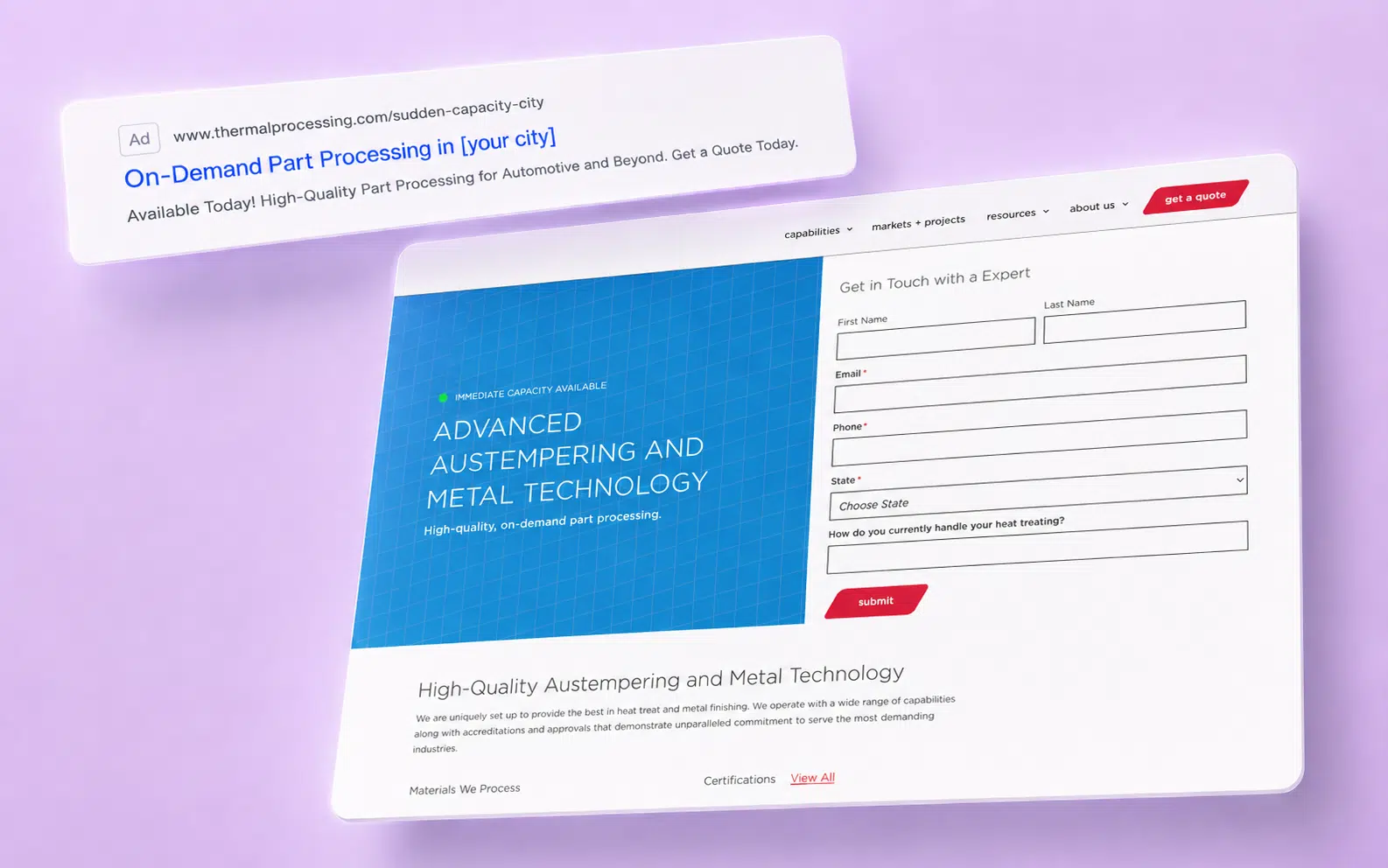
The challenge wasn’t generating awareness. It was agility. How do you go to market with a targeted paid search campaign in a matter of days, not weeks — with custom landing pages, region-specific messaging, and the right keyword strategy — when capacity openings are unpredictable by nature?
GBG recognized that the real challenge wasn’t the capacity gaps themselves — it was the lack of infrastructure to act on them quickly. So we built it.
The Strategy: Build the Infrastructure Before You Need It
Rather than treating each capacity opening as a one-off lead generation campaign, we developed a repeatable, templated paid search framework that could be activated quickly and tailored to specific situations as they arose.
The framework was designed around two distinct scenarios:
Scenario 1: Organic Capacity Openings
When a facility experienced a natural slowdown, a job cancellation, a shift in production volume, or a seasonal dip, the team needed to get in front of buyers searching for heat treat capacity in that region.
Scenario 2: Competitive Facility Closures
When a competitor shut down a facility or experienced a disruption, there was a narrow window to capture displaced customers actively looking for an alternative. These buyers were already in-market, already motivated. The question was whether the right message could reach them before they found someone else.
Both scenarios required the same foundation: pre-built ad group structures, a templated keyword set, and a landing page framework that could be customized quickly without starting from scratch.
The Execution: A Campaign Framework That Moves at the Speed of Business
We built the campaign infrastructure in advance, so activation didn’t require building anything from the ground up.
Templated Ad Groups and Keywords
A core keyword set was established covering relevant search behavior for each facility region. For competitive closure scenarios, we layered in keywords referencing the affected geography and, in some cases, the name of the closed facility to capture searches from buyers already familiar with that provider.
Custom Landing Pages, Ready to Deploy
Landing page templates were developed for each facility, structured around the type of work most likely to come in — automotive, aerospace, and other industry verticals. When capacity opened, the template was adapted with regional specifics and relevant service messaging. What might take weeks with a traditional build process was reduced to a single business day.
Dual-Platform Reach: Google and Bing
The campaigns ran across both Google Ads and Bing Ads, because in certain industries, including government and defense-adjacent manufacturing, Bing represents a large share of search activity due to default browser and IT configurations. Running both platforms ensured full coverage of the buyer pool.
Ongoing Optimization
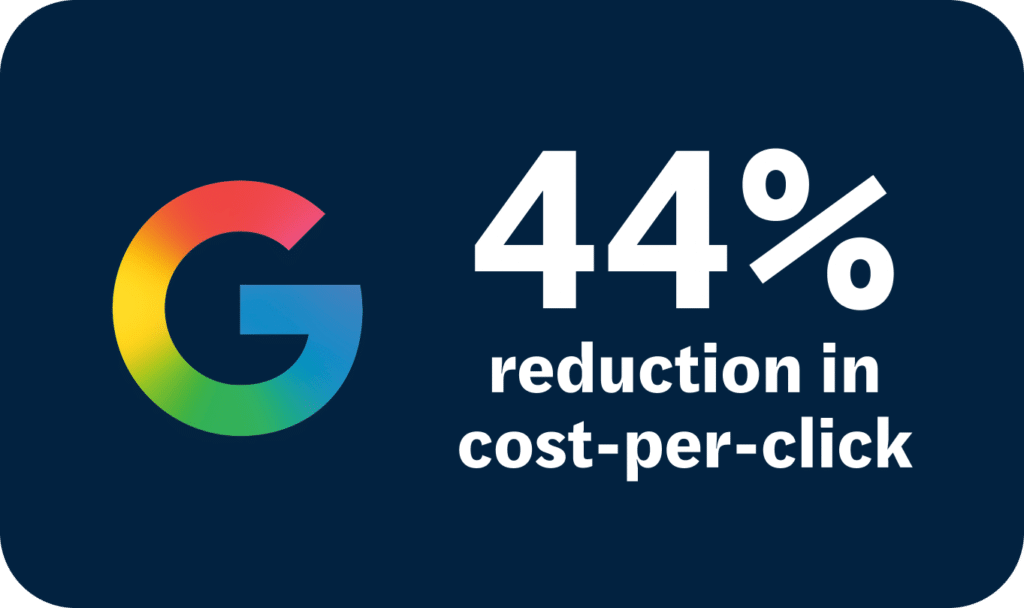
Campaigns were monitored and optimized on a biweekly cadence, with ongoing refinements to bidding, keyword targeting, and ad performance. The Google campaigns were structured to prioritize lead quality over raw volume, a tradeoff that intentionally traded lower impression counts for higher-intent clicks.
The Results: Speed Validated by Performance
Standing up a campaign in a day only matters if the campaign performs. These did. What started as a tactical response to unpredictable capacity has grown into a high-performing, always-on lead generation engine spanning multiple facilities.
Google Ads (2025)
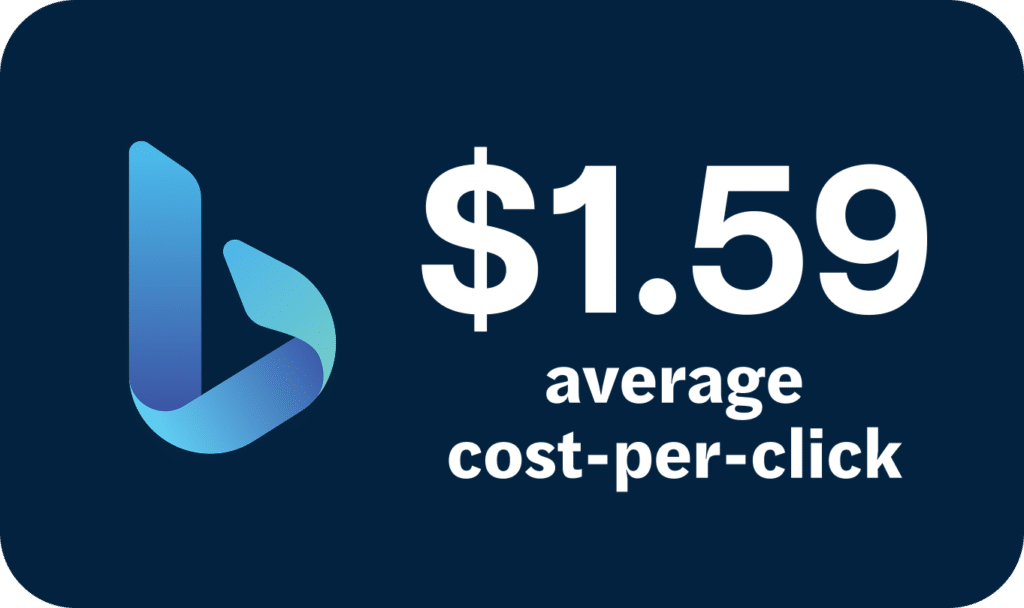
Bing Ads (2025)
Pipeline
One of the more telling results came during a competitive closure event. When a competitor shut down a facility in a key region, we stood up a geographically targeted campaign within a day — driving traffic from that region to a nearby facility with available capacity. The window was short. The framework made it possible to act inside it.
The win wasn’t just the leads generated. It was proof that with the right infrastructure in place, even the most capacity-constrained industrial manufacturer can move with the speed and precision of a digitally native brand.
Why It Worked
Infrastructure before activation
By building the templates, ad groups, and landing page frameworks before a capacity opening occurred, the team eliminated the setup time that typically makes reactive campaigns impractical.
Two scenarios, one system
Rather than treating organic capacity openings and competitive displacement events as separate problems, we built a framework flexible enough to handle both — with minor modifications, not major rebuilds.
Platform strategy matched to buyer behavior
The decision to run on both Google and Bing was deliberate. For industrial manufacturers with customers in government or defense-adjacent sectors, Bing represents real reach that a Google-only strategy misses.
Quality over volume
Google campaign optimizations were specifically designed to reduce low-intent traffic in favor of higher-quality clicks. Impressions dropped. CTR and lead quality went up. That’s the tradeoff worth making.
Opportunity Favors the Prepared
When market windows open in industrial manufacturing, they don’t stay open long. Having the right infrastructure in place meant this client was always ready to move.
Ready to build marketing infrastructure that moves as fast as your business does? Let’s talk.
Share this article with your network.


